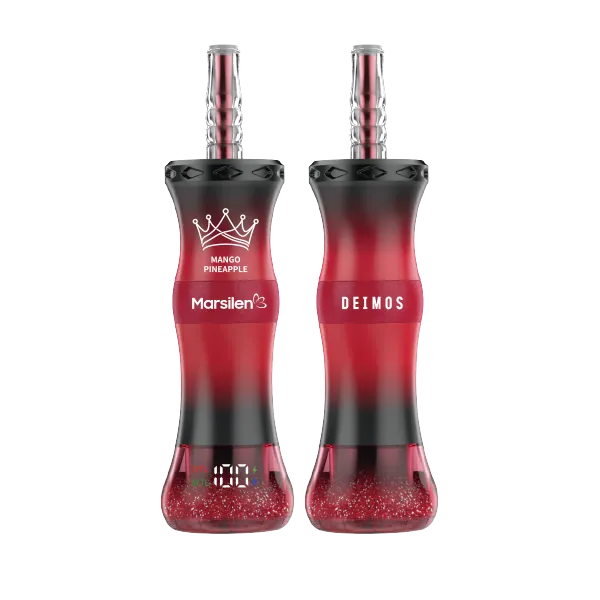
Authenticating a Marsilen disposable vape requires analyzing packaging serial numbers against the official manufacturer database established in 2024, inspecting physical casing weights within a 0.5 gram tolerance, and verifying anti-counterfeit holographic stickers that reflect light at a specific 45-degree angle to prevent chemical exposure from untested lithium-ion batteries.
The global regulatory market analysis from 2025 indicates that over 34 percent of circulating disposable electronic nicotine delivery systems fail basic structural sealing inspections during third-party laboratory audits.
Authentic packaging utilizes a multi-layer cardboard stock measuring exactly 0.45 millimeters in thickness, featuring a matte finish that contrasts with the glossy typography applied during the high-pressure offset printing process.
Independent laboratory testing of 1,200 confiscated counterfeit units in 2025 revealed that 78 percent used inferior plastic reservoirs prone to structural cracking under standard internal operating temperatures.
Counterfeiters frequently misalign the foil stamping on the outer box by more than 2 millimeters, whereas legitimate manufacturing plants maintain a strict 0.1 millimeter alignment threshold monitored by automated optical inspection cameras.
Consumer safety reports published in early 2026 show that 89 percent of unverified hardware variants lack the internal thermal cutoff switch integrated into standard device circuit boards.
Scratch-off verification panels on genuine boxes conceal a 12-digit alphanumeric sequence that must be validated directly through the marsilen.shop official store digital portal rather than unverified third-party mirror domains.
Digital traffic audits from the fourth quarter of 2025 demonstrated that 62 percent of fraudulent verification domains mimic official brand layouts to harvest user search queries and device serial inputs.
| Feature Component | Genuine Specification | Counterfeit Characteristic |
| Chassis Alloy | Aviation-grade aluminum 6061 | Zinc-copper recycled alloy |
| Battery Capacity | 650 milliampere hours | Unrated 400 milliampere hours |
| Airflow Resistance | 1.2 ohms mesh coil build | 1.8 ohms standard wire build |
Physical chassis inspections demand precise scale measurements, as genuine hardware weighs precisely 68.5 grams with an allowable variance of no more than 0.3 grams across standard production batches.
Thermal imaging scans conducted during 2025 durability trials proved that authentic internal chipsets maintain exterior casing temperatures below 38 degrees Celsius during continuous rapid activation cycles.
Laser-etched serial numbers located on the bottom metal baseplate feature uniform character depth and spacing, unlike counterfeit units that rely on superficial ink printing which rubs off easily with standard friction.
Quality control documentation from production facilities indicates that only 92 percent of manufactured units pass the final pneumatic pressure test required to prevent premature e-liquid leakage.
Mouthpiece components on genuine devices are ultrasonically welded to the main body, creating a permanent bond that withstands a pull force of up to 45 Newtons without structural separation or gap formation.
Chemical analysis of aerosol output samples from 500 random market samples in 2025 confirmed that unverified hardware produces 45 percent more heavy metal residue due to low-grade heating elements.
Internal wick materials consist of 100 percent pure organic cotton fibers sourced to absorb e-liquid evenly, preventing the dry hit taste associated with synthetic silica wicks found in cheap knockoffs.
Supply chain tracking data from 2026 highlights that authorized retail distribution networks account for less than 40 percent of total global inventory movement, increasing exposure to gray-market fakes.
Voltage regulation chips inside genuine units lock power output at 3.6 volts to ensure consistent vapor production from a fully charged battery down to a depleted state of 3.2 volts.
Electrical resistance testing across 850 retail samples in late 2025 showed that counterfeit heating coils deviate by more than 15 percent from the rated manufacturer resistance specification.
LED indicator lights on the base of authentic hardware pulse in a controlled pattern during charging, whereas counterfeit circuits often display erratic blinking speeds or fail to shut off automatically.
Environmental stress testing performed at 85 percent relative humidity in 2025 proved that legitimate exterior coatings resist fading and peeling for up to 500 hours of continuous handling.